
Why Restful Sleep Feels Impossible When Anxiety Takes Over

Anti anxiety sleep meditation is a practice that combines deep breathing, mindfulness, and body relaxation techniques to calm racing thoughts and ease physical tension, helping you transition from stress to restorative sleep. Here's what you need to know:
Quick Answer: What is Anti-Anxiety Sleep Meditation?
- What it does: Activates your body's natural relaxation response, lowering heart rate and reducing muscle tension
- How it works: Uses focused breathing, body scans, and guided visualization to quiet the mind
- When to use it: Before bed to ease anxiety or during the night if you wake up feeling stressed
- Time needed: Even 5-10 minutes can make a difference
- Best for: Racing thoughts, physical tension, difficulty falling or staying asleep
Many of us know the frustration all too well. You lie in bed, exhausted, yet your mind refuses to quiet down. Worries replay on loop. Your body feels tense. The clock ticks forward, and the anxiety about not sleeping only makes things worse.
This isn't just uncomfortable—it's a vicious cycle. Anxiety disrupts sleep, and poor sleep intensifies anxiety. The emotional and physical toll shows up the next day as fatigue, irritability, and an even shorter fuse for stress.
But there's a proven way to break this pattern.
Meditation helps calm your mind, relax your body, and reduce the stress that keeps you awake. Research shows it can lower your resting heart rate, decrease blood pressure, and help you sleep better by shifting your nervous system from fight-or-flight mode into a state of deep rest.
The good news? You don't need special equipment, years of practice, or perfect silence. Just a few minutes of focused breathing and gentle awareness can restore your sense of calm and make sleep feel possible again.
I'm Holly Gedwed, a Licensed Professional Counselor Associate with 14 years of experience helping individuals manage anxiety, trauma, and stress through evidence-based approaches including Cognitive Behavioral Therapy and mindfulness practices. Throughout my work, I've seen how anti anxiety sleep meditation becomes a powerful tool for clients who feel trapped by nighttime worry and exhaustion.
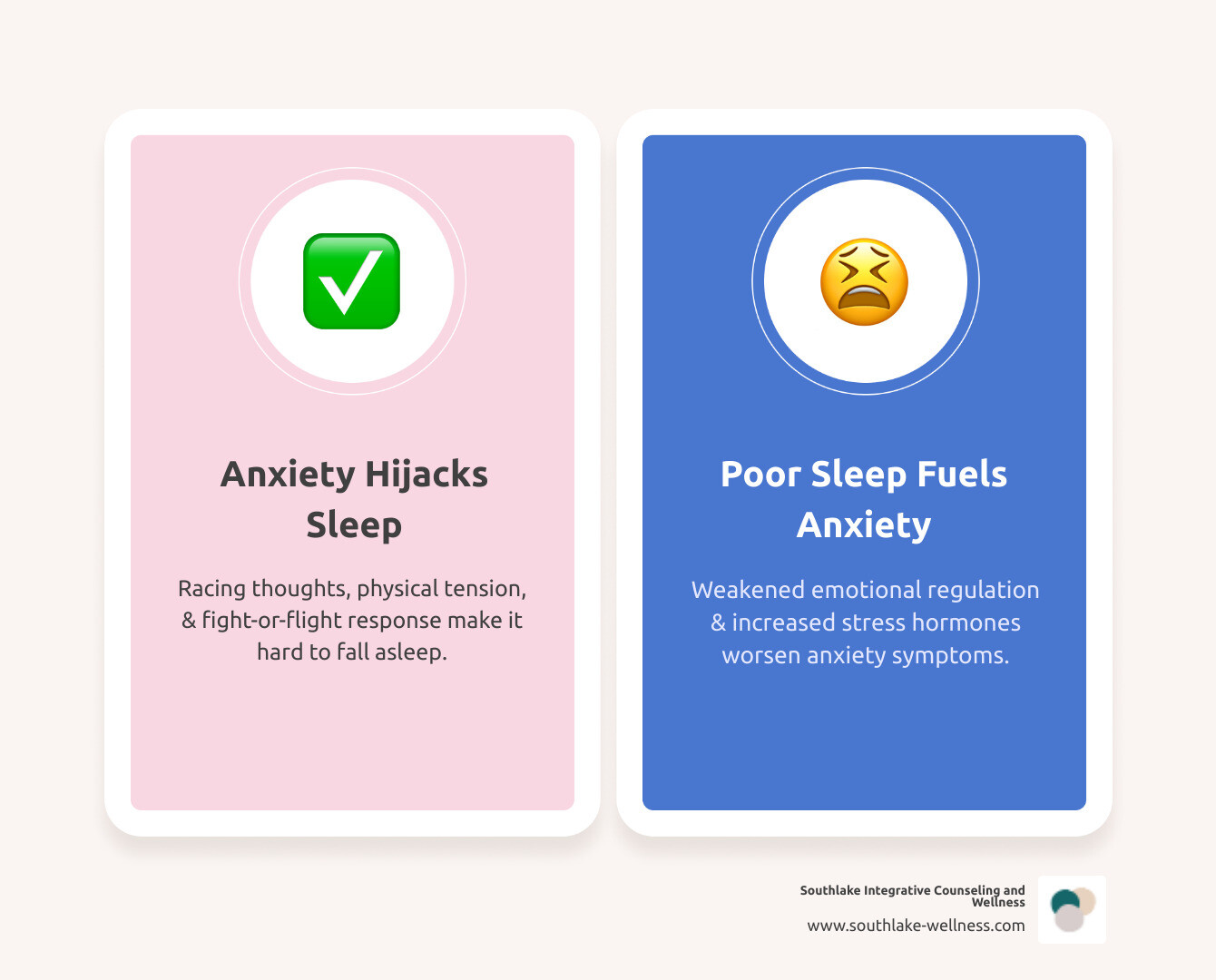
The Vicious Cycle: How Anxiety Hijacks Your Sleep
We've all been there: lying in bed, hours pass, and sleep feels like a distant dream. This common scenario is often a direct result of anxiety, which has a notorious way of hijacking our sleep. When anxiety is high, our body's "fight-or-flight" response, controlled by the sympathetic nervous system, kicks into overdrive. This state of heightened arousal makes it incredibly difficult to relax, quiet our minds, and drift off to sleep. Our heart rate might be liftd, our muscles tense, and our thoughts race, replaying the day's events or catastrophizing about tomorrow.
This isn't just a bad night; it's a significant problem. Many of us struggle with anxiety and spend hours in bed wishing we could turn off our mind and get to sleep. This constant struggle can lead to insomnia, a sleep disorder characterized by difficulty falling asleep, staying asleep, or experiencing non-restful sleep. It's a cruel feedback loop: the more anxious we are, the less we sleep, and the less we sleep, the more anxious we become. Addressing the root of chronic stress is key to breaking this cycle. For a deeper understanding of how prolonged stress impacts us, we often refer to resources like our guide on What is Chronic Stress.
Why Anxiety Worsens at Night
It’s common for anxiety—and other adverse mental health symptoms—to worsen at night. Why does this happen? As the day winds down, several factors converge to amplify our anxious thoughts:
- Reduced Distractions: During the day, work, social interactions, and daily tasks provide a constant stream of distractions. At night, these distractions fade away, leaving us alone with our thoughts. The quiet environment becomes a breeding ground for rumination.
- Fatigue: When we're tired, our mental defenses are lower, making it harder to manage intrusive thoughts or emotional distress. Our ability to cope with stress diminishes, and worries can feel more overwhelming.
- Overthinking: The stillness of the night often encourages overthinking. We might replay conversations, worry about future events, or dwell on past mistakes. This mental chatter prevents our brains from entering the relaxed state necessary for sleep.
- Hormonal Shifts: Our bodies experience natural hormonal fluctuations throughout the day. Some research suggests that these shifts can influence anxiety levels, with certain hormones potentially increasing anxiety at night.
- Fear of Sleeplessness: The more we worry about not sleeping, the harder it becomes to sleep. This "performance anxiety" surrounding sleep adds another layer to our nighttime distress, creating a self-fulfilling prophecy.
The Physical and Mental Toll of Sleeplessness
The impact of chronic sleeplessness due to anxiety extends far beyond just feeling tired. It takes a significant toll on both our physical and mental well-being:
- Daytime Fatigue and Impaired Functioning: Lack of sleep leads to persistent tiredness, making it difficult to concentrate, perform daily tasks, and maintain productivity at work or school.
- Increased Irritability: Sleep deprivation can make us more moody, short-tempered, and prone to emotional outbursts.
- Weakened Emotional Regulation: Our ability to manage emotions effectively diminishes, making us more reactive to stressors and less resilient in the face of challenges.
- Worsened Anxiety Symptoms: The cycle deepens as poor sleep exacerbates existing anxiety symptoms, making us feel even more overwhelmed and on edge.
- Physical Health Issues: Chronic sleep deprivation can contribute to a range of physical problems, including a weakened immune system, increased risk of heart disease, and metabolic issues.
For those seeking a comprehensive approach to well-being that considers the intricate connections between mind, body, and spirit, our Holistic Mental Wellness Ultimate Guide offers valuable insights.
How Anti-Anxiety Sleep Meditation Restores Calm
So, how does anti anxiety sleep meditation actually work to break this cycle and bring us peace? The core mechanism lies in its ability to activate our body's natural relaxation response, effectively counteracting the stress response that keeps us awake.

Meditation helps calm your mind, relax your body, and reduce stress, which can lead to better sleep and lower anxiety levels. When we engage in mindful meditation, we shift from the sympathetic nervous system (fight-or-flight) to the parasympathetic nervous system (rest-and-digest). This shift brings a cascade of beneficial physiological changes:
- Lowering Heart Rate: Meditation helps lower our resting heart rate, signaling to our body that it's safe to relax.
- Reducing Blood Pressure: Consistent meditation practice can contribute to lower resting blood pressure.
- Decreasing Muscle Tension: As our minds calm, the physical tension we often hold in our shoulders, jaw, and other areas begins to release.
- Promoting Present Moment Awareness: Instead of dwelling on past worries or future anxieties, meditation gently guides our attention to the present moment, where we can find peace.
These benefits extend beyond just getting to sleep. The emotional and physical benefits of meditation can include: giving us a new way to look at things that cause stress, building skills to manage stress, making us more self-aware, focusing on the present, reducing negative feelings, helping us be more creative and patient, and ultimately, helping us sleep better. We explore many of these advantages in our guide on the Benefits of meditation.
The Science Behind the Calm
The effectiveness of anti anxiety sleep meditation isn't just anecdotal; it's backed by science. Meditation helps with anxiety by promoting a state of relaxation and calmness. It helps regulate the body’s stress response system, lower physical arousal levels, and encourage a healthier sleep-wake cycle. This is partly due to meditation's impact on neuroplasticity—our brain's ability to reorganize itself by forming new neural connections. Regular meditation can literally reshape our brains, strengthening areas associated with calmness and emotional regulation, while quieting those linked to fear and anxiety, like the amygdala.
Meditation also works by helping us detach from anxious thoughts. Instead of getting caught in a spiral of worry, we learn to observe our thoughts without judgment, allowing them to pass like clouds in the sky. This practice not only reduces the immediate impact of anxiety but also builds our resilience over time, making us less susceptible to its grip. For those interested in the therapeutic applications of these practices, our Mindfulness-Based Therapy Guide 2025 offers further reading.
The Role of Mindfulness in Anti-Anxiety Sleep Meditation
Mindfulness is the bedrock of effective anti anxiety sleep meditation. It's the practice of being fully present and aware of the current moment, without judgment. In the context of sleep meditation, mindfulness means:
- Non-judgmental Observation: Instead of getting frustrated by racing thoughts or physical discomfort, we simply acknowledge them without attaching judgment. "Oh, there's a thought about tomorrow's meeting," rather than "I can't believe I'm still thinking about this!"
- Focusing on the Present: Our minds naturally drift. Mindfulness gently brings our attention back to an anchor—often our breath or body sensations—keeping us grounded in the here and now.
- Acknowledging Thoughts Without Attachment: We learn that thoughts are just thoughts. They don't define us, and we don't need to engage with every single one. We can observe them, let them be, and then return our focus to our meditation.
- Reducing Rumination: By practicing non-attachment to thoughts, we significantly reduce rumination, the repetitive dwelling on negative thoughts that often fuels anxiety and prevents sleep.
- Cultivating Self-Awareness: Mindfulness helps us become more attuned to our internal states—our emotions, physical sensations, and thought patterns. This increased awareness is the first step toward managing them effectively.
The goal isn't to empty our minds, but to change our relationship with our thoughts and feelings. This shift is incredibly powerful for anxiety and sleep. To learn more about integrating this practice into your daily life, explore our guide on How to Practice Mindfulness.
Common Techniques for Your Nightly Practice
There are many techniques used in anti anxiety sleep meditation, and the beauty is that you can find what resonates most with you. Whether you're looking for guided meditation or prefer a self-guided approach, the goal is always to cultivate a state of calm and relaxation conducive to sleep.
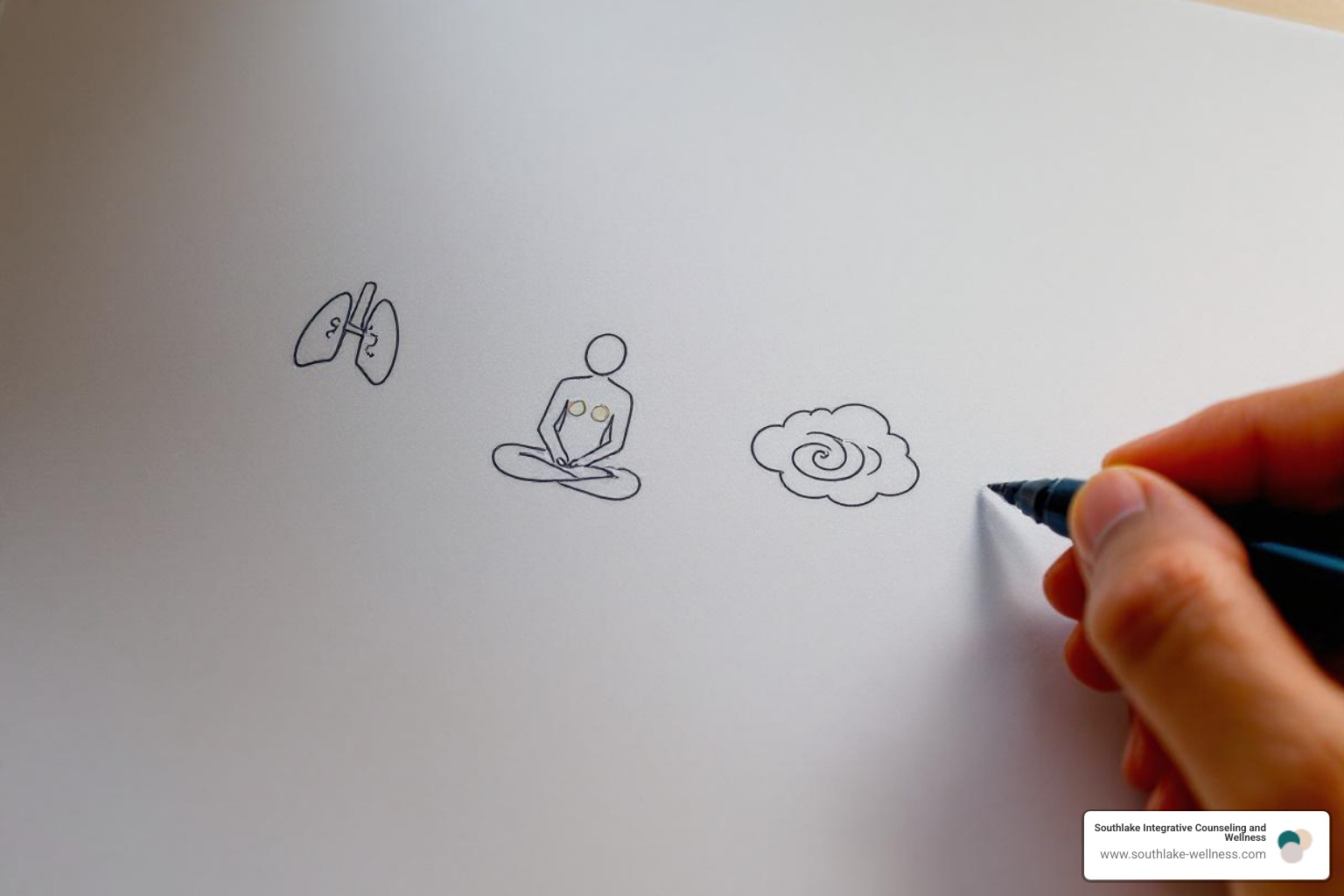
At Southlake Integrative Counseling and Wellness, we often incorporate these techniques into our holistic therapy sessions, and many clients find them profoundly helpful for managing anxiety and improving sleep. You can access guided meditations through various means, including in-person sessions with our therapists or through audio recordings we might provide.
Here are some common and highly effective techniques:
Body Scan Meditation
This technique involves systematically bringing awareness to different parts of your body, noticing any sensations without judgment, and consciously releasing tension. It's like giving your body a mental "scan" from head to toe.
- Progressive Muscle Relaxation: This often precedes or is integrated into a body scan. You tense and then relax different muscle groups in your body, noticing the contrast between tension and release.
- Releasing Physical Tension: Many of us hold stress in our bodies. A body scan helps us become aware of these areas and, with each exhale, intentionally release the tightness.
- Mindful Awareness of the Body: It grounds us in our physical self, drawing attention away from racing thoughts.
- Starting from Toes to Head: A common approach is to begin with your toes, move up through your feet, ankles, calves, knees, thighs, hips, abdomen, chest, back, arms, hands, neck, face, and finally the top of your head.
- Noticing Sensations Without Judgment: You might notice warmth, tingling, coolness, or even discomfort. The practice is to observe these sensations without trying to change them, simply allowing them to be.
Guided Imagery and Visualization
Guided imagery uses mental pictures to create a sense of peace and relaxation. This is particularly effective for those with active imaginations.
- Creating a Mental Sanctuary: Imagine a place that feels completely safe, peaceful, and comforting. This could be a serene beach, a lush forest, a cozy cabin, or any place your mind conjures.
- Peaceful Place Visualization: Engage all your senses in this imagined place. What do you see, hear, smell, feel? The more vivid the details, the more immersive and relaxing the experience.
- Imagining Worries Floating Away: A common technique is to visualize your anxious thoughts or worries as leaves on a stream, clouds in the sky, or bubbles floating away. Watch them disappear without chasing them.
- Using Sensory Details: Focus on the warmth of the sun, the sound of gentle waves, the scent of pine, or the feeling of soft grass beneath you. These details help your mind fully engage with the calming scene. For a practical example, you can Listen to a guided meditation for sleep that uses these techniques.
Mindful Breathing
Our breath is a powerful tool, always available to us, to regulate our nervous system. Focusing on our breath is one of the most fundamental and effective meditation techniques.
- Focusing on the Breath: Simply observe the natural rhythm of your inhale and exhale. Notice the sensation of air entering and leaving your body.
- Diaphragmatic Breathing (Belly Breathing): This deep breathing technique activates the parasympathetic nervous system. Place one hand on your chest and one on your belly. As you inhale, feel your belly rise; as you exhale, feel it fall.
- Counting Breaths: To keep your mind focused, you can count your breaths, perhaps inhaling for a count of four, holding for four, and exhaling for four, or simply counting each exhale up to ten and then starting again.
- Calming the Nervous System: Deep, slow breathing sends signals to your brain that you are safe, reducing the physiological symptoms of anxiety.
- Anchoring to the Present Moment: When your mind wanders, gently bring your attention back to the sensation of your breath. It's a constant, reliable anchor.
Loving-Kindness (Metta) Meditation
This meditation focuses on cultivating feelings of warmth, compassion, and kindness towards ourselves and others. It can be incredibly soothing for anxiety, especially when self-criticism is at play.
- Cultivating Compassion: Begin by silently repeating phrases of goodwill towards yourself, such as "May I be safe. May I be happy. May I be healthy. May I live with ease."
- Directing Well-Wishes to Self and Others: Extend these wishes outward to loved ones, then to neutral individuals, then to difficult people, and finally to all beings.
- Reducing Self-Criticism: This practice helps to soften harsh self-judgment and fosters a sense of inner peace and acceptance.
- Fostering Feelings of Safety and Love: By intentionally generating these positive emotions, we create a more nurturing internal environment, which can be incredibly beneficial for winding down before sleep. Building emotional resilience is a key outcome of such practices, as detailed in our guide on how to Build Emotional Resilience.
Building Your Anti-Anxiety Sleep Meditation Routine
Incorporating anti anxiety sleep meditation into your routine doesn't have to be another source of stress. The key is consistency over duration, and approaching it with patience and self-compassion. Even a few minutes of meditation can help restore your calm and inner peace.
A Simple Step-by-Step Guide for Beginners
If you're new to meditation, start simple. Here's a basic guide to get you started:
- Find a comfortable position: Lie down in your bed or sit comfortably in a chair. The goal is to be relaxed but not so comfortable that you immediately fall asleep (unless that's your intention!).
- Set a timer: Start with just 5-10 minutes. You can gradually increase the duration as you become more comfortable. You can use a timer with a gentle chime to signal the end of your session.
- Focus on your breath: Close your eyes or soften your gaze. Bring your attention to the sensation of your breath. Notice the rise and fall of your chest or abdomen, the air entering and leaving your nostrils.
- Gently return focus when your mind wanders: Your mind will wander. That's what minds do! When you notice your thoughts drifting, simply acknowledge it without judgment and gently guide your attention back to your breath. This is the core practice.
- End with gratitude: As your timer signals the end, take a moment to notice how you feel. Offer a silent word of gratitude for taking this time for yourself.
The goal isn't to stop thinking, but to change your relationship with your thoughts. This simple routine can be a powerful tool to Develop Coping Skills Guide for anxiety and sleep.
Overcoming Common Challenges
It’s completely normal to encounter challenges when starting a meditation practice. Don't worry, you're not alone!
- Mind Wandering: This is perhaps the most common challenge. As we mentioned, it's natural for the mind to wander. The practice is not to prevent thoughts, but to recognize them and gently return your focus to your anchor (like your breath). Each time you do this, you're strengthening your "attention muscle."
- Falling Asleep Too Quickly: If you're meditating to get to sleep, this is a win! But if you're trying to build a consistent practice before sleep, you might try sitting up or using a meditation that's specifically designed to keep you present for a short period before transitioning to sleep.
- Impatience: We live in a world, and it's easy to get frustrated if we don't feel immediate results. Meditation is a practice, not a performance. Be patient with yourself, and trust that the benefits accumulate over time.
- Physical Discomfort: If you're experiencing discomfort, adjust your position. The goal is to be comfortable enough to relax, but alert enough to stay present.
- No "Perfect" Meditation: There's no right or wrong way to meditate. Some days will feel easier than others. Accept the process, and let go of the idea of perfection.
When to Seek Professional Support
While anti anxiety sleep meditation is a powerful tool, it's important to view it as a complementary practice, not a replacement for professional therapy, especially if you're dealing with severe or persistent anxiety and sleep issues. Meditation can help people manage symptoms of conditions such as anxiety, chronic pain, depression, and sleep problems. However, if your struggles are significantly impacting your daily life, it might be time to seek additional support.
How Therapy Complements Your Meditation Practice
At Southlake Integrative Counseling and Wellness, we often recommend meditation as part of a broader, personalized treatment plan. Therapy can address the deeper, underlying causes of your anxiety and sleep disturbances that meditation alone might not fully resolve.
- Addressing Root Causes of Anxiety: A therapist can help you identify and explore the origins of your anxiety, whether they stem from past experiences, current life stressors, or specific thought patterns.
- Cognitive Behavioral Therapy for Insomnia (CBT-I): Offered by Southlake Integrative Counseling and Wellness, CBT-I is an evidence-based approach specifically designed to treat chronic insomnia. It helps you identify and change thoughts and behaviors that prevent you from sleeping well, and it's often combined with mindfulness and relaxation techniques.
- Learning Advanced Coping Skills: Beyond meditation, therapy can equip you with a wider range of coping mechanisms and emotional regulation strategies to manage anxiety throughout your day.
- Treating Specific Anxiety Disorders: If you're struggling with Generalized Anxiety Disorder (GAD), Panic Disorder, Social Anxiety Disorder, or other specific anxiety conditions that impact sleep, therapy can provide targeted interventions. For more information on finding the right support, consider our guide on Anxiety Psychologist Near Me in the Southlake, TX area. We offer specialized support for Anxiety Therapy Southlake.
The Benefits of a Holistic Approach
We believe in a holistic approach to mental wellness, recognizing that true healing involves integrating mind, body, and spirit. Combining therapy with anti anxiety sleep meditation and other practices can create a powerful synergy.
- Integrating Mind and Body Practices: We combine evidence-based therapies with alternative modalities like meditation and yoga to promote emotional balance and resilience.
- Combining Therapy with Meditation and Yoga: Many of our clients find that incorporating practices like yoga, which combines physical postures, breathing techniques, and meditation, improves their overall well-being and improves sleep quality.
- Nutritional Support for Mental Health: We also recognize the important role of nutrition in mental health, guiding clients towards dietary choices that can support brain function and mood regulation.
- Creating a Personalized Wellness Plan: Our unique approach emphasizes personalized treatment plans, ensuring that your path to better sleep and reduced anxiety is custom to your specific needs and goals. This integrative approach is central to our philosophy of Integrative Mental Health.
Conclusion
We understand how debilitating anxiety can be, especially when it steals your precious sleep. But we hope this guide has shown you that restful nights are not just a dream—they are an achievable reality through the powerful practice of anti anxiety sleep meditation.
By understanding how anxiety hijacks your sleep, embracing the calming science behind meditation, and incorporating simple, effective techniques into your routine, you can begin to reclaim your nights and wake up feeling refreshed and re-energized. From body scans and guided imagery to mindful breathing and loving-kindness, these practices empower you to quiet your mind, relax your body, and foster inner peace.
Consistency is key, and patience with yourself is paramount. Even a few minutes a day can make a profound difference. And if your anxiety or sleep issues feel overwhelming, we want you to know that you don't have to steer this journey alone.
At Southlake Integrative Counseling and Wellness, we believe in a holistic path to well-being, offering comprehensive support that integrates mind-body practices like meditation with evidence-based therapies. We are here to help you develop the coping skills and resilience needed to live a life with less stress and more restorative sleep. Take the first step towards peaceful nights and explore how practices like yoga can further improve your well-being.