
Understanding When PMR Falls Short
The disadvantages of progressive muscle relaxation are often overlooked in discussions about stress management, yet they're important to understand. While PMR has helped many people reduce physical tension since its development by Edmund Jacobson in the 1920s, it's not the right fit for everyone—and in some cases, it can even backfire.
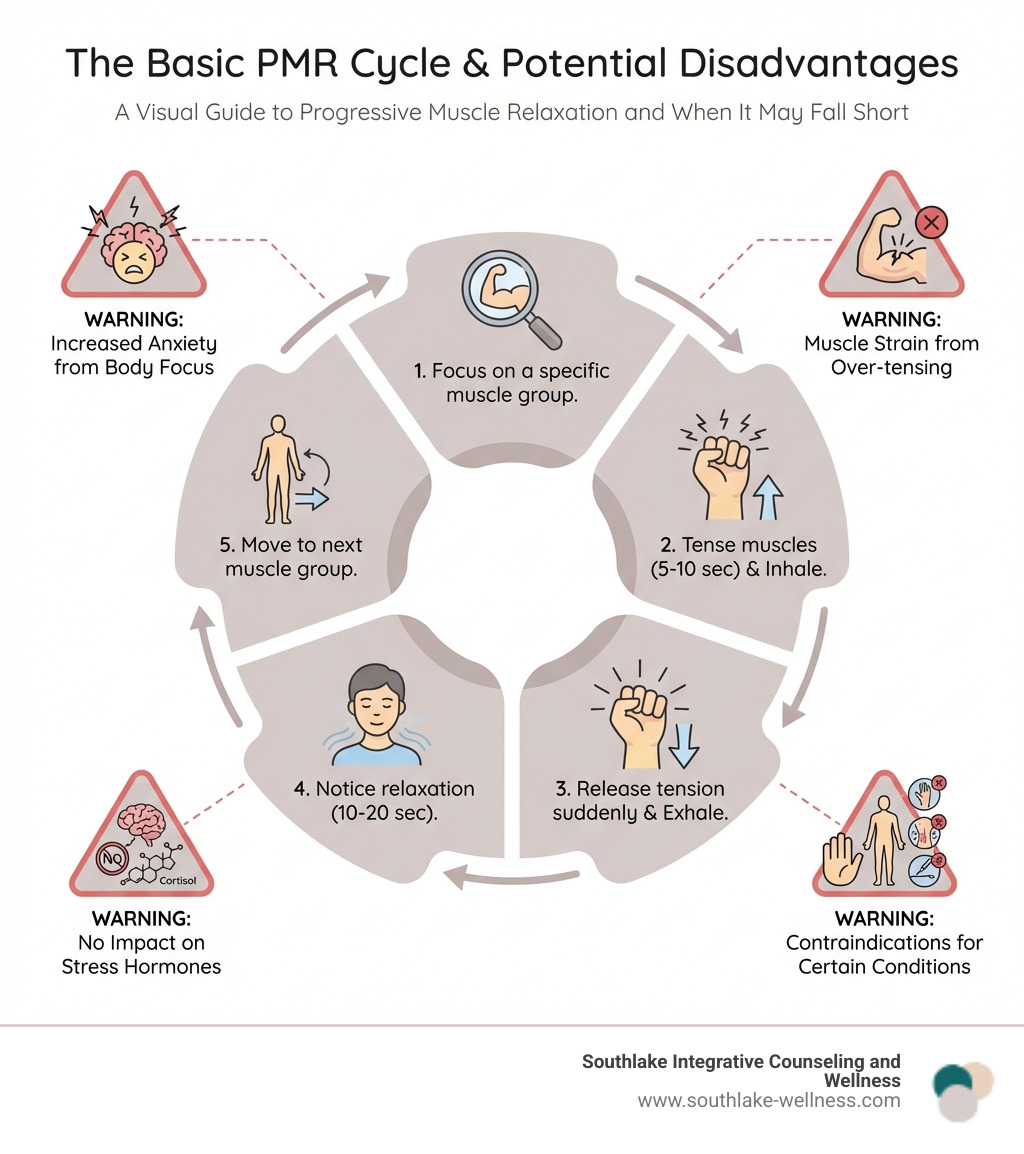
Key disadvantages of progressive muscle relaxation include:
- Paradoxical anxiety - Increased body awareness can trigger more anxiety instead of reducing it, particularly in those with trauma histories or severe anxiety
- Worsening symptoms in severe mental health conditions - For people with high severity of depression or anxiety, deliberately tensing muscles may intensify physical symptoms
- Limited hormonal impact - PMR doesn't reduce cortisol (the primary stress hormone), only addressing physical tension
- Physical contraindications - Not suitable for people with serious injuries, muscle spasms, back problems, or recent surgeries
- Rare adverse reactions - Some individuals experience muscle twitching, heart palpitations, or increased pain
- Incomplete stress relief - PMR addresses physical symptoms but doesn't tackle mental or emotional components of stress
- Risk of over-reliance - Using PMR alone may prevent addressing root causes of stress and anxiety
PMR works by having you systematically tense and then release different muscle groups throughout your body. The theory is simple: physical relaxation leads to mental calmness. But research shows this connection isn't always straightforward.
As Holly Gedwed, LPC-Associate with 14 years of clinical experience specializing in trauma and anxiety, I've seen how the disadvantages of progressive muscle relaxation can impact clients—particularly those with trauma histories who find the somatic focus triggering rather than soothing. My work centers on finding the right therapeutic modality for each unique individual, because what relaxes one person can paradoxically distress another.
The Psychological Paradox: When Relaxation Triggers Distress
For many, the goal of relaxation techniques like PMR is to calm the mind and body. However, for some individuals, the very act of focusing internally can lead to a surprising and unwelcome outcome: increased distress. This phenomenon, often termed "paradoxical anxiety" or "relaxation-induced anxiety," highlights a significant disadvantage of progressive muscle relaxation.
When practicing PMR, we intentionally bring our attention to various parts of our body, noting the sensations of tension and then release. While this heightened body awareness is usually beneficial, helping us to identify and alleviate physical stress, it can backfire. In rare cases, this intense somatic focus can lead to more anxiety instead of a reduction. People might become overly aware of subtle bodily signals, misinterpreting normal physiological processes as signs of impending danger or panic. This can lead to intrusive thoughts or a fear of losing control, making the relaxation practice feel anything but relaxing.
We understand that seeking relaxation should be a comforting experience, not a source of new worries. If you find yourself experiencing heightened anxiety during relaxation exercises, it might be a sign that a different approach is needed. For personalized support in managing anxiety, explore our specialized services for Anxiety Therapy Southlake.

Can PMR Worsen Severe Depression or Anxiety?
While PMR is often recommended for mild to moderate stress and anxiety, its application becomes more nuanced when dealing with severe mental health conditions. One of the critical disadvantages of progressive muscle relaxation is its potential to exacerbate symptoms in individuals with high severity of depression and anxiety.
The core technique of PMR involves deliberately tensing muscles before releasing them. For someone already struggling with severe anxiety, this intentional tensing might amplify existing physical symptoms of anxiety, such as muscle rigidity, restlessness, or somatic discomfort, rather than relieving them. Similarly, for those with severe depression, the inward focus required for PMR could lead to increased rumination, where they dwell on negative thoughts and feelings, making their depressive symptoms worse instead of better.
Research indicates that for certain psychiatric conditions, including schizophrenia and other severe mental disorders, PMR is generally not recommended. There have been rare reports where relaxation techniques might cause or worsen symptoms in people with certain psychiatric conditions or those with a history of abuse or trauma. The deliberate focus on physical sensations can be overwhelming or even re-traumatizing for some.
When addressing severe mental health challenges, we believe in exploring a range of therapeutic options that are carefully custom to individual needs. If you're seeking alternative approaches for managing depression, our resources on Alternative Depression Treatments offer valuable insights.
The Disadvantage of Hypervigilance in Progressive Muscle Relaxation
The very mechanism that makes PMR effective for many—the focus on physical sensations—can become a disadvantage for others. For individuals prone to health anxiety or those who are already hypervigilant about their bodily functions, PMR can inadvertently intensify this pattern.
When we ask someone to pay close attention to the tension and relaxation in their muscles, they might start scrutinizing every subtle sensation. This can lead to misinterpreting normal bodily signals as signs of illness or impending panic. A slight muscle twitch, which is usually harmless, could be blown out of proportion, triggering a cycle of worry and fear. This heightened self-awareness, when coupled with a pre-existing tendency towards anxiety, can paradoxically induce more anxiety rather than relaxation. Instead of achieving a state of calm, the individual might become more agitated, feeling overwhelmed by their internal experiences.
We understand that developing healthy coping skills is crucial for managing anxiety and stress effectively. For guidance on building resilience and navigating challenging emotions, explore our insights on developing coping skills.
Physical Contraindications and Potential Side Effects
While PMR is generally considered a safe technique, it's not universally appropriate. Just as with any physical activity or therapeutic intervention, there are specific situations and health conditions where practicing PMR might not be advisable or could even be harmful. Understanding these physical contraindications and potential side effects is a crucial aspect of recognizing the disadvantages of progressive muscle relaxation.
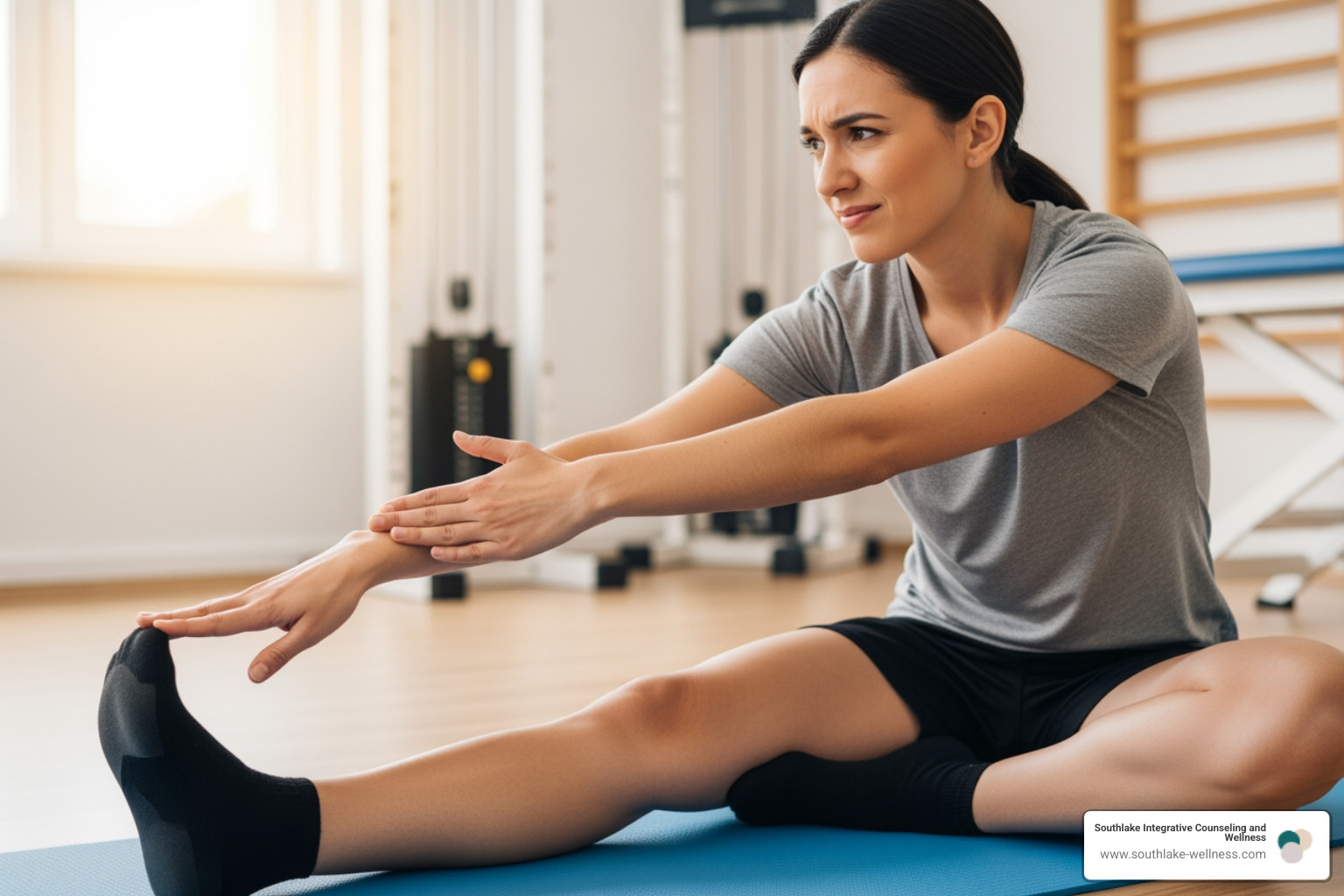
When we start on any new physical practice, listening to our body is paramount. This is especially true for PMR, which involves intentionally tensing muscles. For individuals with certain pre-existing conditions, this tensing action could exacerbate their symptoms or lead to injury. This is why we always recommend consulting a physician or healthcare provider before starting PMR, particularly if you have underlying health issues. It's about being proactive and ensuring that the path to relaxation doesn't lead to unintended discomfort. If a specific exercise causes discomfort, cramping, or pain, ease up, stop, or skip that particular muscle group. The goal is gentle tension, not strain.
Who Should Avoid PMR?
Certain physical conditions make PMR an unsuitable or potentially risky practice. Here's a list of conditions that are generally considered contraindications for PMR, particularly without medical supervision:
- Serious Injuries: If you have acute muscle strains, sprains, fractures, or other significant musculoskeletal injuries, deliberately tensing muscles could worsen the injury and hinder the healing process.
- Muscle Spasms: Individuals who frequently experience muscle spasms may find that the tensing phase of PMR triggers or intensifies these involuntary contractions, leading to discomfort rather than relief.
- Back Problems: For those with chronic back pain, herniated discs, or other spinal conditions, the tensing of core or back muscles could place undue stress on the spine, potentially aggravating the condition.
- Recent Surgery: Following any surgical procedure, especially those involving muscle tissue, tensing can interfere with healing, cause pain, or even lead to complications. It's crucial to allow adequate recovery time and get clearance from your surgeon.
- Certain Chronic Pain Conditions: While PMR can help with some types of chronic pain, for others, the act of focusing on painful areas and tensing them might heighten pain perception or trigger flare-ups. This is highly individual, and caution is advised.
- Heart Conditions: People with certain heart conditions, especially those with unstable angina or recent heart attack, should consult their doctor before engaging in PMR. While generally low-impact, any physical exertion should be cleared by a cardiologist.
- High Blood Pressure: Although PMR can help lower blood pressure over time, individuals with uncontrolled high blood pressure should exercise caution and seek medical advice, as intense tensing might temporarily lift blood pressure.
In these situations, modified relaxation techniques or alternative approaches may be more appropriate and safer.
Rare but Documented Adverse Physical Reactions
While infrequent, some individuals have reported adverse physical reactions to relaxation techniques, including PMR. These instances, though rare, highlight that even seemingly benign practices can have unexpected effects. Research has shown that in some people who use relaxation techniques, there have been extremely rare instances of pain, heart palpitations, and muscle twitching.
Specifically, within the context of PMR:
- Muscle Twitching: The focused tensing and releasing can, in rare cases, lead to involuntary muscle twitches or fasciculations, which can be unsettling.
- Heart Palpitations: Some individuals might experience a heightened awareness of their heartbeat, which they perceive as palpitations. While often benign, it can be anxiety-provoking.
- Increased Pain: Instead of alleviating pain, the tensing phase might intensify existing discomfort, particularly if muscles are already sore or injured.
- Cramping: Overly enthusiastic tensing or holding tension for too long can sometimes lead to muscle cramping, especially if one is dehydrated or has electrolyte imbalances.
- Straining Muscles: If not performed correctly, with gentle tension rather than forceful contraction, there's a risk of straining muscles, which defeats the purpose of relaxation.
These rare occurrences underscore the importance of listening to your body and modifying the technique as needed.
Key Limitations: The Disadvantages of Progressive Muscle Relaxation
While PMR offers tangible benefits for physical relaxation, it's important to recognize its inherent limitations. One of the significant disadvantages of progressive muscle relaxation is its primary focus on the physical manifestations of stress, often leaving the mental and emotional components unaddressed when used as a standalone technique. Stress is a complex phenomenon, impacting our mind, body, and emotions in interconnected ways. Reducing physical tension is certainly helpful, but it's only one piece of the puzzle.
When we consider the cognitive aspects of anxiety—the racing thoughts, the catastrophic predictions, the constant worrying—PMR, by itself, doesn't directly challenge these thought patterns. Similarly, for emotional distress like sadness, anger, or chronic worry, simply relaxing the body may not provide the deeper processing or coping strategies needed.
Inability to Reduce Key Stress Hormones
One of the often-cited benefits of various stress management techniques is their ability to influence our body's hormonal response to stress. However, a notable disadvantage of progressive muscle relaxation is its limited impact on key stress hormones like cortisol.
Cortisol, often dubbed the "stress hormone," is released by the adrenal glands as part of the body's fight-or-flight response. While PMR effectively reduces muscle tension and can help bring the body from a state of alertness to a more relaxed one, research suggests it doesn't significantly help in reducing cortisol levels. One study noted that PMR might help balance serotonin levels, a neurotransmitter associated with mood, but it does not directly reduce cortisol. In fact, a randomized controlled trial (RCT) on cancer patients found no significant difference in cortisol levels when comparing PMR to usual care. This contrasts with other interventions, such as physical exercise, which are known to influence cortisol regulation.
This limitation means that while PMR can provide subjective feelings of calm and reduce physical tension, it may not be addressing the deeper physiological stress response at the hormonal level as effectively as other modalities. We believe in a comprehensive approach to well-being. To understand more about managing your body's stress response holistically, explore our resources on Holistic Stress Management Techniques.
The Risk of Relying Solely on PMR
In our journey toward mental wellness, it's easy to latch onto a single technique that offers some relief. However, another significant disadvantage of progressive muscle relaxation emerges when it's relied upon as the sole solution for stress management. While PMR is a valuable tool for alleviating physical tension, it acts more like a "band-aid" if the underlying causes of stress and anxiety are left unaddressed.
PMR, by its nature, primarily targets physical symptoms. It doesn't engage in cognitive restructuring, a technique used in therapies like Cognitive Behavioral Therapy (CBT) to challenge and change unhelpful thought patterns that fuel stress and anxiety. It also doesn't directly help in processing emotional triggers or developing broader coping mechanisms for life's challenges. If we only relax our muscles without exploring the source of our worries, the stress will likely return as soon as the relaxation session ends.
This over-reliance can prevent individuals from developing a more robust and comprehensive approach to long-term stress management. For sustained well-being, we advocate for an integrative approach that addresses the mind-body connection in its entirety. This means combining effective techniques and therapies to foster resilience and address root causes. Learn more about our philosophy on Integrative Mental Health.
PMR vs. Other Mind-Body Techniques: A Comparative Look
When we consider the vast landscape of mind-body techniques available for stress and anxiety management, it becomes clear that no single method is a one-size-fits-all solution. Understanding the disadvantages of progressive muscle relaxation often involves comparing it to other modalities to highlight its strengths and weaknesses relative to different needs.
| Technique | Primary Focus | Best For | Potential Drawbacks |
|---|---|---|---|
| Progressive Muscle Relaxation (PMR) | Somatic (Physical) | Physical tension, muscle pain, sleep onset insomnia | Can increase anxiety (paradoxical anxiety), less effective for emotional/cognitive symptoms, potential physical contraindications, limited hormonal impact. |
| Guided Imagery (GI) | Cognitive/Imaginative | Emotional symptoms (anxiety, depression, stress), pain management, enhancing positive emotions | Less effective for purely physical tension, requires imagination, may not appeal to all individuals. |
| Mindfulness | Cognitive/Attentional | Emotional regulation, cognitive restructuring, acceptance, overall well-being | Can be challenging to learn, may intensify discomfort initially, requires consistent practice, not a quick fix for acute physical tension. |
When Guided Imagery or Mindfulness Might Be Better
Emerging research often points to the differential effects of various relaxation techniques, suggesting that some are better suited for specific types of symptoms. This sheds light on situations where PMR might not be the optimal choice, underscoring its disadvantages in certain contexts.
For instance, a randomized clinical trial comparing Guided Imagery (GI) and PMR in nursing students found distinct outcomes. The study revealed that while both PMR and GI significantly reduced physical symptoms, Guided Imagery was significantly more effective in reducing emotional symptoms such as depression, anxiety, and stress. PMR's effect on emotional symptoms in this study was not statistically significant, possibly because the participants were beginner relaxation practitioners who needed more practice to gain these benefits. This suggests that for emotional distress, anxiety, or depression that has a strong cognitive component, techniques that directly engage the mind, like Guided Imagery or Mindfulness, might offer more targeted relief.
Mindfulness, for example, teaches us to observe our thoughts and feelings without judgment, fostering a more detached and accepting relationship with internal experiences. This cognitive focus can be particularly powerful for managing anxiety and depression by addressing the thought patterns that perpetuate them. For more on this powerful approach, explore our guide to Mindfulness-Based Therapy.
It's not about one technique being "better" than another in all circumstances, but rather about understanding which method aligns best with the specific challenges you're facing.
Creating a Holistic Relaxation Practice
Given the diverse nature of stress and its impact on the mind, body, and emotions, we advocate for a holistic relaxation practice that integrates various techniques. Relying solely on PMR, with its noted disadvantages, can be limiting. Instead, combining PMR with other mind-body modalities can create a more robust and personalized wellness strategy.
For example, while PMR helps release physical tension, integrating deep breathing exercises can further calm the nervous system. Adding mindfulness meditation can help manage intrusive thoughts and emotional reactivity. Practices like yoga not only combine physical movement with breathwork but also foster a deeper Mind-Body Connection, promoting overall balance and resilience.
A truly personalized wellness approach recognizes that what works best is often a blend of strategies, custom to your unique needs and evolving circumstances. This allows us to address not just the symptoms of stress but also its underlying causes and cognitive patterns, fostering lasting emotional balance and resilience.
Frequently Asked Questions about PMR's Downsides
We often encounter questions about the effectiveness and potential drawbacks of Progressive Muscle Relaxation. Here, we address some common concerns to provide a clearer picture of its limitations.
Can progressive muscle relaxation make you feel worse?
Yes, for some individuals, PMR can paradoxically make them feel worse. While rare, this is a documented disadvantage of progressive muscle relaxation. For people with severe anxiety, the increased body awareness inherent in PMR can lead to heightened anxiety, intrusive thoughts, or a fear of losing control. Similarly, for those with high severity of depression and anxiety, deliberately tensing muscles may intensify existing physical symptoms and general discomfort. In some extremely rare instances, relaxation techniques have been associated with pain, heart palpitations, or muscle twitching. Furthermore, individuals with a history of trauma or certain psychiatric conditions like schizophrenia may find the somatic focus triggering or worsening of symptoms, making PMR an unsuitable choice.
Why doesn't PMR lower the stress hormone cortisol?
PMR primarily targets the somatic nervous system, focusing on the conscious control of muscle tension and relaxation. While this process can lead to a subjective feeling of calm and reduce physical manifestations of stress, research suggests it does not significantly impact the hypothalamic-pituitary-adrenal (HPA) axis, which is the body's central stress response system responsible for regulating cortisol production. Studies have shown that while PMR may help balance serotonin levels, it doesn't reduce cortisol, the primary stress hormone, in the same way that other interventions like aerobic exercise might. Therefore, while PMR can alleviate the symptoms of stress, it may not directly influence the physiological production of stress hormones.
Is PMR a complete solution for stress management?
No, PMR is not a complete solution for stress management. This is one of the most crucial disadvantages of progressive muscle relaxation when considered in isolation. PMR primarily addresses the physical symptoms of stress, such as muscle tension, and can be very effective for that purpose. However, it does not directly tackle the cognitive or emotional triggers of stress, such as negative thought patterns, unresolved emotional issues, or behavioral responses to stressors. Relying solely on PMR can be likened to putting a band-aid on a wound without cleaning it or addressing its cause. For comprehensive, long-term stress management, PMR is best used as part of a broader, holistic approach to stress management that integrates cognitive, emotional, and behavioral strategies.
Conclusion: A Balanced and Personalized Path to Wellness
Progressive Muscle Relaxation is undoubtedly a valuable tool in the stress management toolkit for many, offering a straightforward method to alleviate physical tension and promote a sense of calm. However, as we've explored, it's far from a one-size-fits-all cure. Understanding the disadvantages of progressive muscle relaxation—from its potential to exacerbate anxiety in vulnerable individuals to its limited impact on stress hormones and its inability to address the cognitive and emotional roots of stress—is essential for a truly effective approach to well-being.
At Southlake Integrative Counseling and Wellness, we believe that genuine emotional balance and resilience stem from a personalized approach that honors the intricate connection between mind and body. We recognize that what relaxes one person may distress another, and what works for physical tension might not address emotional or cognitive distress. Our unique approach emphasizes holistic care, combining evidence-based therapies with alternative modalities to create treatment plans that are custom to your individual needs.
By understanding the limitations of any single technique, we empower ourselves to seek comprehensive solutions that foster lasting peace and well-being. If you're seeking a personalized path to mental wellness that goes beyond one-dimensional approaches, we invite you to Explore Individual Therapy in Southlake TX with us. Together, we can find what truly works for you.