
Understanding Your Journey with PTSD Coping Skills
PTSD coping skills are practical strategies that help you manage symptoms like flashbacks, anxiety, and avoidance after experiencing trauma. Here are the most effective techniques you can start using today:
Immediate Relief Techniques:
- Grounding - Use the 5-4-3-2-1 method (name 5 things you see, 4 you touch, 3 you hear, 2 you smell, 1 you taste)
- Deep Breathing - Inhale for 4 counts, hold for 4, exhale for 6 to calm your nervous system
- Self-Soothing - Engage your senses with ice, warm drinks, or calming music
Long-Term Management:
- Regular exercise and healthy sleep routines
- Journaling to process thoughts and track progress
- Building a support network of trusted friends or groups
- Challenging negative thought patterns
- Professional therapy like CBT, EMDR, or Cognitive Processing Therapy
While an event may last only minutes, the impact can last much longer. Around 70% of people experience at least one traumatic event during their lifetime, and for some, these experiences lead to Post-Traumatic Stress Disorder.
PTSD is not a sign of weakness. It's a natural response to overwhelming circumstances. Your brain and body are trying to protect you, even when the danger has passed.
The good news? Active coping means accepting the impact of trauma on your life and taking direct action to improve things. Recovery is an ongoing, daily process that happens little by little.
As Holly Gedwed, an LPC-Associate with 14 years of experience specializing in trauma, I've helped many individuals develop effective PTSD coping skills custom to their unique needs. Together, we can work through unhealthy patterns and build confidence in your ability to heal.
Understanding PTSD and Its Impact

Experiencing trauma is a profound and often life-altering event. It's natural to feel afraid during and after a traumatic situation, as fear is part of our body's natural "fight-or-flight" response to danger. However, for some, the stress of trauma continues or returns months, or even years, afterward. This is when Post-Traumatic Stress Disorder (PTSD) can develop.
What is PTSD and How Does It Develop?
At its core, trauma refers to the emotional and psychological response to an event or series of events perceived as deeply distressing or life-threatening. It's not just the event itself but how the individual experiences it that defines trauma. Different events can cause trauma, and while an event may last only minutes, the impact can last much longer.
PTSD is a mental health condition that can emerge after you experience or witness a terrifying event. It’s important to remember that not everyone who experiences trauma develops PTSD; many individuals will recover over time without formal intervention. However, if symptoms persist for more than a month and significantly interfere with daily life, a diagnosis of PTSD may be appropriate.
The symptoms of PTSD usually begin within three months of the traumatic event, but sometimes they can emerge much later. Our bodies and minds are incredibly complex, and how we process and react to extreme stress varies from person to person. At Southlake Integrative Counseling and Wellness, we understand that healing emotional trauma is a unique journey for everyone. Learning more about what is post-traumatic stress disorder can be a crucial first step in your healing journey.
Common Symptoms and Triggers
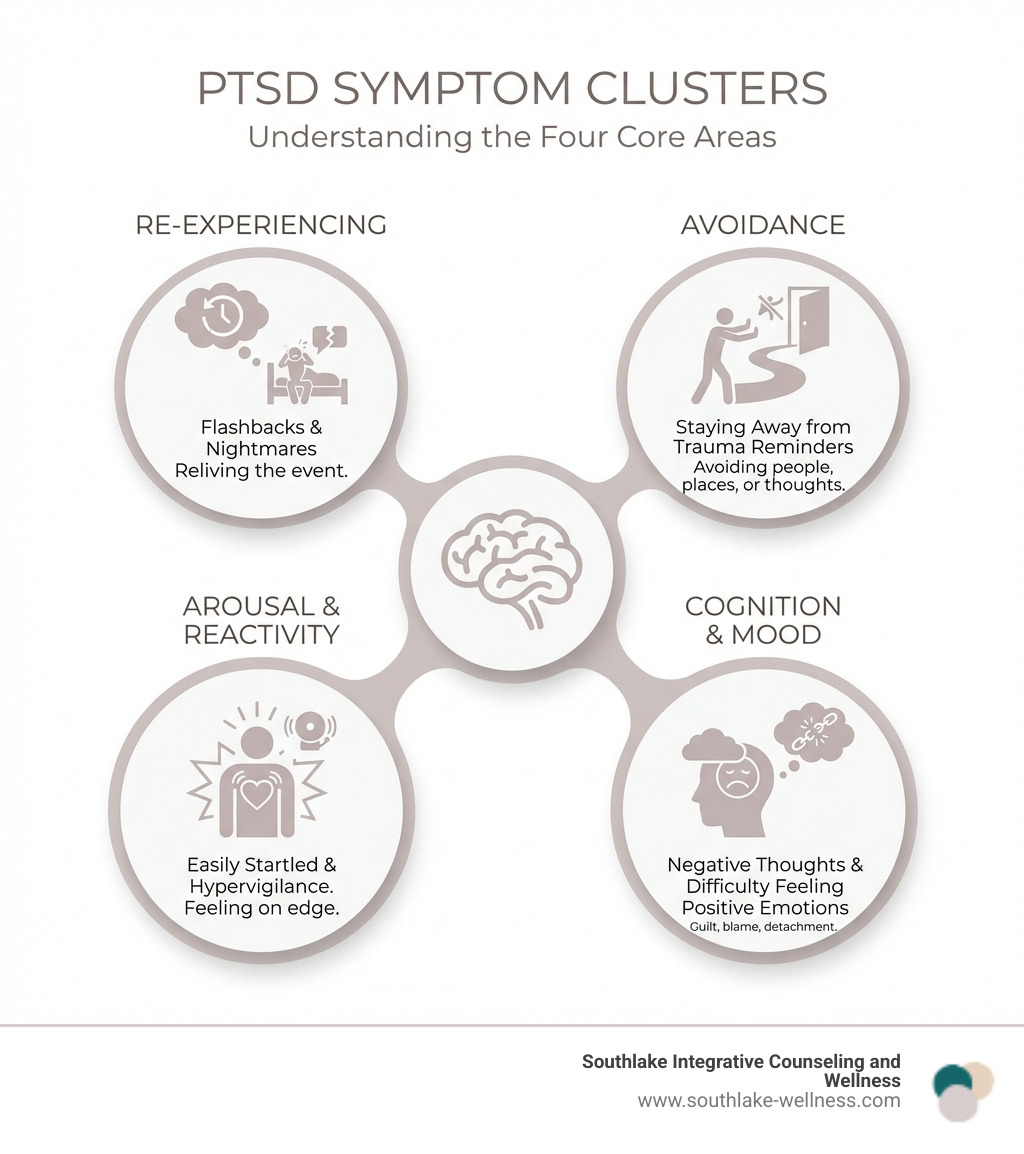
PTSD manifests through a range of common symptoms, which are typically grouped into four main clusters:
Re-experiencing Symptoms: These are intrusive and often vivid reminders of the traumatic event. They can include:
- Flashbacks: Feeling as though the traumatic event is happening again. This can be incredibly disorienting and scary.
- Nightmares: Disturbing dreams related to the trauma.
- Intrusive thoughts or memories: Unwanted, recurring thoughts or images of the event.
Avoidance Symptoms: To cope with the distress, individuals with PTSD often try to avoid anything that reminds them of the trauma. This might mean:
- Avoiding places, people, objects, or activities.
- Avoiding thoughts, feelings, or conversations about the traumatic event.
Arousal and Reactivity Symptoms: These symptoms reflect a heightened state of alert, as if danger is still present. They include:
- Being easily startled or on guard (hypervigilance).
- Difficulty concentrating.
- Irritability, anger, or aggressive outbursts.
- Difficulty sleeping.
Cognition and Mood Symptoms: These involve negative changes in thoughts and feelings. You might experience:
- Negative beliefs about yourself, others, or the world.
- Feelings of detachment from friends, family, or activities.
- Loss of interest in previously enjoyable activities.
- Difficulty experiencing positive emotions.
A critical aspect of managing PTSD is understanding triggers. Triggers are anything that reminds a person of the traumatic event. These can be specific places, people, smells, sounds, or even certain thoughts and feelings. Triggers can be categorized as:
- External Triggers: Sights, sounds, smells, tastes, or touches in your environment (e.g., a car backfiring, a specific song, a certain time of day, a news report).
- Internal Triggers: Thoughts, memories, emotions, or bodily sensations (e.g., a racing heart, feeling anxious, an anniversary of the event).
Knowing how to deal with PTSD triggers is a vital step in healing and reducing symptoms that can disrupt daily life and relationships.
How Triggers Affect the Mind and Body
When you encounter a trigger, it can feel as if the traumatic event is happening all over again. This isn't just a psychological response; it's deeply physiological. Your body perceives danger, even if there is none in the present moment, and activates its stress response.
The body releases stress hormones like adrenaline, preparing you for "fight or flight." This can lead to a cascade of physical reactions:
- A racing heart
- Shaking hands
- Shortness of breath
- Sweating
- Nausea or loss of appetite
- Muscle tension
Emotionally, being triggered can lead to intense feelings of fear, anxiety, anger, sadness, despair, guilt, or shame. You might find it difficult to concentrate, feel distant from others, or struggle to control your emotions. This is your body's way of trying to protect you, but it can be overwhelming when the danger is no longer real. Understanding this physiological response is part of learning to manage chronic stress and its impact.
Immediate In-the-Moment PTSD Coping Skills
When PTSD symptoms flare up, especially during a flashback or intense anxiety, immediate coping skills are invaluable. These techniques are designed to bring you back to the present moment and regain a sense of control.
Grounding Techniques to Reconnect with the Present
Grounding techniques are powerful tools that help you focus on what is real and distract you from upsetting thoughts or feelings. They bring you out of panic and into the present moment.
One of the most widely used and effective grounding techniques is the 5-4-3-2-1 method:
- 5 things you can SEE: Look around and name five objects you can clearly observe.
- 4 things you can TOUCH: Identify four things you can physically feel (e.g., your clothes, the chair, the texture of your skin).
- 3 things you can HEAR: Listen closely and identify three distinct sounds (e.g., traffic outside, your own breathing, a clock ticking).
- 2 things you can SMELL: Notice two smells around you, even subtle ones (e.g., your lotion, coffee, fresh air).
- 1 thing you can TASTE: Focus on one taste in your mouth (e.g., residual taste from a drink, mint, or simply the taste in your mouth).
Other simple grounding exercises you can do anywhere include:
- Hold a piece of ice and focus on the cold sensation.
- Describe your immediate environment in detail, as if you're narrating it for someone else.
- Press your feet firmly into the floor, feeling the pressure and connection to the ground.
- Listen for distinct sounds around you, identifying each one.
- Sip a warm or cold drink and focus on the temperature, flavor, and sensation as you swallow.
Sensory engagement can also help. Try washing your face with cool water, applying some scented lotion, eating something sweet or sour, turning on some music, or simply gazing out a window. For more on staying present, explore how to practice mindfulness.
The Role of Mindfulness and Relaxation
While closely related, mindfulness and grounding serve slightly different purposes. Grounding is often used during acute distress to pull you back to the present. Mindfulness, on the other hand, is a broader practice of becoming aware of the present moment without judgment. It's about non-judgmental observation of your thoughts, feelings, and sensations as they arise.
Mindfulness helps you stay in touch with and aware of the present, which can pull you out of anxious thoughts and worries about the past or future. However, for individuals with a history of trauma, mindfulness can sometimes bring difficult emotions to light, and it may be beneficial to practice under the guidance of a trauma-informed therapist. Our mindfulness-based therapy guide 2025 offers deeper insights into this practice.
Relaxation techniques are also crucial for managing PTSD symptoms.
- Deep Breathing: Diaphragmatic breathing (also known as belly breathing) is a powerful tool. When we are stressed or anxious, our breathing often becomes shallow and fast. Relearning to breathe deeply from the diaphragm can send signals back to our brain to "chill" and let us know we are not in danger. The effect of diaphragmatic breathing has been shown to reduce negative affect and stress.
- Progressive Muscle Relaxation (PMR): This technique involves tensing and then relaxing different muscle groups throughout your body, from your toes to your head. It helps you become aware of muscle tension and consciously release it, promoting a deeper state of physical and mental relaxation.
Self-Soothing and Distraction Techniques
Self-soothing strategies are designed to comfort and calm yourself, especially when social support isn't immediately available. These techniques often engage your senses in a comforting way:
- Self-touch: Gentle self-holding or self-massage can be very comforting.
- Weighted blankets: Lying down with a weighted blanket can provide a sense of security and calm.
- Relaxing music: Listening to soothing melodies can significantly reduce stress and anxiety.
- Aromatherapy: Certain scents, like lavender, can promote relaxation and stress reduction.
Distraction techniques are purposeful ways to shift your attention away from strong and uncomfortable emotions like anxiety and fear. While not a long-term solution, they can be highly effective for short-term relief, allowing intense emotions to decrease in intensity. Doing something different for just 10 to 15 minutes can help minimize the effects of triggering events.
Consider these positive distraction activities:
- Calling a friend or loved one.
- Reading a book or engaging in a captivating story.
- Watching your favorite TV show or a relaxing video.
- Doing housework or a simple chore.
- Engaging in a creative task like drawing, painting, or knitting.
- Playing a game, counting backward, or reciting a mantra.
- Visualizing a peaceful scene.
- Coloring, playing video games, or doing yoga.
For more tools and personalized strategies, the PTSD Coach Online tools offer a menu of options to help with various challenges. Developing emotional regulation therapy guide can provide further insights into managing your feelings effectively.
Proactive Strategies for Long-Term Management
While immediate coping skills are essential for managing acute symptoms, building a robust toolkit of proactive strategies is key for long-term healing and recovery from PTSD. These strategies help strengthen your resilience and promote overall well-being.
Building Your Toolkit of PTSD Coping Skills with a Healthy Lifestyle
A healthy lifestyle forms the foundation for managing PTSD symptoms and fostering recovery. Our holistic coping strategies emphasize the interconnectedness of mind, body, and spirit.
- Physical Activity: Regular exercise is a powerful tool. It helps release endorphins, which are natural mood boosters, and reduces stress hormones like cortisol. Engaging in physical activity can also connect you with your body in a positive way and serve as a healthy distraction from distressing thoughts. Even a daily walk can make a significant difference in managing irritability, anger, and overall stress levels.
- Nutrition's Role: What we eat profoundly impacts our mental health. A balanced diet provides the necessary nutrients for brain function and mood regulation. Consider incorporating mood-boosting foods into your daily routine.
- Sleep Hygiene: Quality sleep is crucial for mental and physical restoration. People with PTSD often struggle with sleep disturbances, including nightmares. Maintaining a regular sleep schedule, avoiding heavy exercise before bed, keeping your bedroom dark and cool, and limiting alcohol, tobacco, and caffeine can significantly improve sleep quality. If you wake from a nightmare or have difficulty sleeping, get out of bed and do something soothing until you feel ready to return.
The Power of Support Systems and Expressive Writing
You don't have to steer PTSD alone. Building and utilizing a strong support system is a major factor in overcoming the negative effects of trauma.
- Social Support: Talking to trusted friends, family members, or a professional can provide emotional validation and encouragement. It's essential to communicate openly about your PTSD, including your triggers and needs. Consider joining a support group where you can connect with others who share similar experiences. The benefits of group therapy are profound, offering a sense of community and shared understanding.
- Expressive Writing: Journaling or expressive writing is a powerful way to process thoughts and feelings related to your trauma. It allows you to explore your experiences in a safe, private space, which can reduce PTSD symptoms, tension, and anger. Expressive writing has been found to improve physical and psychological health, fostering post-traumatic growth. Writing regularly can help you make sense of your narrative and even track your progress over time.
Challenging Unhelpful Thinking and Using Behavioral Activation
Trauma can deeply impact our thought patterns, often leading to unhelpful or distorted ways of thinking.
- Challenging Unhelpful Thinking: Cognitive distortions like catastrophizing ("My partner's late; they must have been in an accident"), mind-reading, jumping to conclusions, personalizing, black-and-white thinking, and "must" or "should" statements are common after trauma. Learning to challenge these thoughts is a key component of building effective PTSD coping skills. This involves questioning the evidence for your thoughts, considering alternative perspectives, and asking yourself what you would say to a friend in a similar situation. This process helps you reframe negative thoughts into more balanced and realistic statements.
- Behavioral Activation: PTSD can lead to avoidance, causing individuals to withdraw from activities they once enjoyed. Behavioral activation is a way of increasing your activity level and engaging in positive and rewarding activities, even if you don't feel motivated at first. This strategy combats avoidance by setting weekly goals for completing rewarding activities and tracking your progress. It can significantly reduce symptoms of depression and anxiety by helping you reconnect with life and experience positive reinforcement. Our develop coping skills guide offers more strategies for building these essential life tools.
Professional Pathways to Healing and Recovery
While self-help strategies and lifestyle changes are incredibly valuable, sometimes professional guidance is necessary to steer the complexities of PTSD. Evidence-based therapies offer structured and effective pathways to healing.
How Evidence-Based Therapy Can Help
Working with a mental health professional experienced in treating PTSD can provide custom strategies and support. The American Psychological Association (APA) recommends several interventions for treating PTSD, primarily variations of cognitive behavioral therapy (CBT).
- Cognitive Behavioral Therapy (CBT): This approach focuses on the relationships among thoughts, feelings, and behaviors. It helps you identify and change unhelpful patterns that contribute to your distress. Our cognitive behavioral therapy page provides a comprehensive overview.
- Cognitive Processing Therapy (CPT): A specific type of CBT, CPT is typically delivered over 12 sessions. It helps you learn how to challenge and modify unhelpful beliefs related to the trauma, leading to a new, healthier understanding of the event and its impact.
- Prolonged Exposure (PE): This CBT-based therapy typically involves weekly individual sessions over about three months. PE teaches you to gradually approach trauma-related memories, feelings, and situations that you've been avoiding. By confronting these safely, you learn that they are not dangerous and do not need to be avoided.
- Eye Movement Desensitization and Reprocessing (EMDR) Therapy: EMDR is a structured therapy that encourages you to focus on the trauma memory while simultaneously experiencing bilateral stimulation (e.g., guided eye movements). This process helps reduce the vividness and emotional charge of traumatic memories.
These evidence-based therapy techniques are designed to help you process your experiences and develop new, healthier coping skills.
Creating a Personalized Safety Plan
A personalized safety plan is a crucial tool for managing PTSD, especially during times of heightened distress or crisis. This plan is unique to you and outlines concrete steps to take when you feel overwhelmed. Key components typically include:
- Identifying Triggers: A clear understanding of what sets off your symptoms.
- Listing Coping Strategies: A list of the immediate and proactive PTSD coping skills that work best for you.
- Support Contacts: Names and numbers of trusted friends, family members, or support group members you can reach out to.
- Professional Help Numbers: Crisis lines, your therapist's contact, or other mental health resources.
- Safe Places: Both physical locations where you feel secure and mental images or activities that bring you comfort.
Developing this plan with a therapist, as part of individual therapy, can ensure it's comprehensive and effective for your specific needs. Our individual therapy Southlake guide can help you find the right support.
Personalizing Your PTSD Coping Skills and Taking the Next Steps
Everyone's journey with PTSD is unique. What works for one person may not work for another, and that's perfectly okay. The key is to find the combination of strategies and support that best suits your individual needs and lifestyle.
Don't hesitate to seek further help or treatment for PTSD. If your symptoms don't begin to go away or get worse over time, it's important to reach out to a mental health professional. We offer personalized mental health care at Southlake Integrative Counseling and Wellness, understanding that your path to healing is yours alone.
If you're in Texas and looking for support, our guide on how to find the best therapist in Texas can assist you. For immediate support, please don't hesitate to contact the National Suicide & Crisis Lifeline at 988, available 24 hours a day, 365 days a year.
Frequently Asked Questions about PTSD Coping Skills
We often hear common questions from individuals exploring PTSD coping skills. Here are some answers to provide clarity and encouragement on your journey.
How long does it take for PTSD coping skills to work?
Recovery from PTSD is an ongoing, daily process. It happens little by little; it is not a matter of being cured all of a sudden. When you first start practicing PTSD coping skills, you might not feel an immediate change, and that's normal. Think of it like learning a new language or skill – it takes practice and consistency. Each time you respond in positive ways to your anxiety or panic, you will be working toward making it happen less often. Practice will make it easier to cope. You will likely see gradual improvement in your symptoms over time, rather than a sudden "fix." Be patient and kind to yourself throughout this process.
Can you manage PTSD without professional help?
While self-help strategies are incredibly valuable and can significantly improve symptoms, especially for mild to moderate cases, managing PTSD effectively often benefits from professional guidance. If your efforts at coping don't seem to work, or if your PTSD symptoms don't begin to go away or get worse over time, it is important to reach out and call a counselor or mental health professional. They can provide a proper diagnosis, offer evidence-based therapies like CBT or EMDR, and, if appropriate, discuss medication options. For individuals experiencing severe symptoms or co-occurring conditions like depression or substance use, professional intervention is highly recommended. You are not alone, and there is effective help available.
What is the difference between grounding and mindfulness?
Grounding and mindfulness are complementary skills, but they serve slightly different purposes:
- Grounding: Primarily used during moments of acute distress, panic, or flashbacks. Its main goal is to "pull you back" to the present moment, away from overwhelming emotions or intrusive memories. It often involves focusing on external sensory details (like the 5-4-3-2-1 technique) or physical sensations to anchor you in reality.
- Mindfulness: A broader practice that involves intentionally bringing your attention to the present moment, observing your thoughts, feelings, and bodily sensations without judgment. It can be practiced at any time, whether you're feeling calm or distressed, to cultivate greater awareness and acceptance. While grounding is a specific technique for crisis, mindfulness is a continuous practice that builds overall emotional resilience and can make you less reactive to triggers over time.
Both are valuable PTSD coping skills and can be integrated into your daily life to improve your well-being.
Conclusion: Your Path Forward to a Vibrant Life
Navigating the journey of PTSD is challenging, but recovery is an ongoing process, and healing is absolutely possible. You have the power to take direct action and build a life that feels vibrant and fulfilling. When you learn that the symptoms of PTSD often happen after traumatic events, you realize that you are not alone, weak, or crazy. Instead, you are responding to an experience that overwhelmed your system, and with the right tools and support, you can learn to manage its impact.
At Southlake Integrative Counseling and Wellness, we understand the profound impact of trauma and are dedicated to helping you build emotional resilience. We offer specialized trauma therapies in Southlake, Texas, combining evidence-based approaches with alternative modalities to promote emotional balance and a strong mind-body connection. We believe in personalized treatment plans that honor your unique journey.
If you're ready to take the next step in your healing, we invite you to learn more about Accelerated Resolution Therapy (ART) and other trauma-informed services we provide. We are here to support you in developing the PTSD coping skills that will empower you to live a full and meaningful life.