
Understanding the Growing Need for Stress Management Support
Stress management therapy is a structured approach that uses evidence-based techniques to help individuals develop healthy coping strategies and reduce the harmful effects of chronic stress on both mind and body.
What is stress management therapy?
- Professional counseling focused on stress reduction techniques
- Evidence-based approaches like CBT, MBSR, and psychodynamic therapy
- Personalized treatment plans addressing individual stress triggers
- Tools for managing both acute and chronic stress responses
Who can benefit?
- Anyone experiencing persistent stress, anxiety, or overwhelm
- Individuals with stress-related physical symptoms
- People seeking healthier coping mechanisms
- Those wanting to prevent stress from impacting daily life
With nearly half of women reporting rising stress levels and 82% of people experiencing some stress, it's clear this has become a universal challenge. While small amounts of stress can be motivating, persistent stress harms our emotional balance and overall health.
The good news is that you are not powerless. Stress management therapy offers proven techniques and professional support to help you regain control over your thoughts, emotions, and reactions to life's challenges.
I'm Holly Gedwed, a Licensed Professional Counselor Associate with 14 years of clinical experience specializing in anxiety, depression, and trauma. My practice focuses on customizing therapeutic approaches like CBT and DBT to help individuals break unhealthy stress patterns and build lasting resilience.
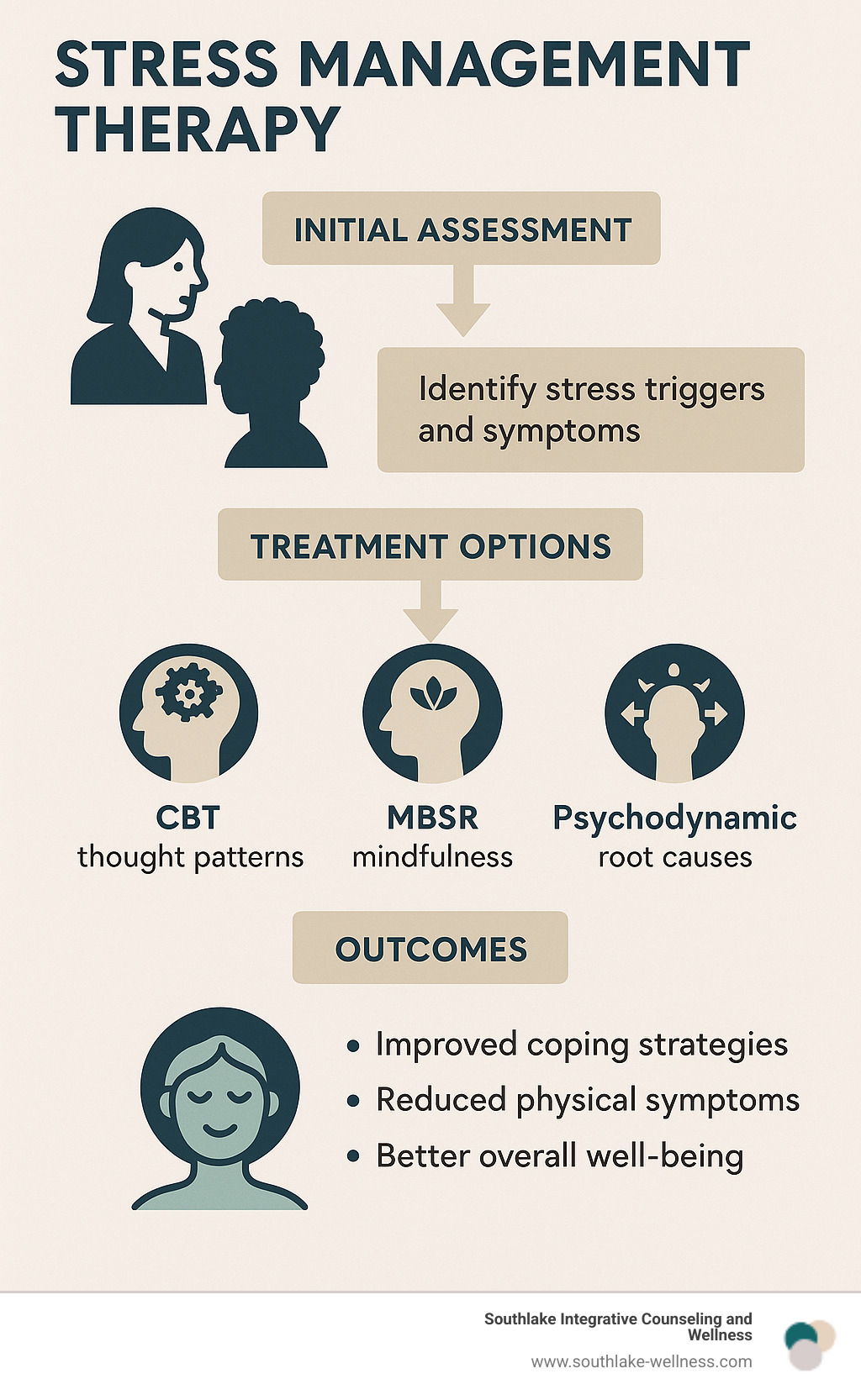
Important stress management therapy terms:
The Science of Stress: How It Affects Your Mind and Body
Stress is our body's natural reaction to changes or challenges, known as "stressors." This feeling of overwhelm can arise from positive events, like a new job, and negative ones, like financial worries.
Our bodies are wired with a "fight-or-flight" response to protect us from danger. When we perceive a threat, our sympathetic nervous system triggers a cascade of physiological changes: our heart rate increases, muscles tense, breathing quickens, and stress hormones like cortisol flood our system. This gives us the energy and focus needed to confront or escape a threat.
Stress also profoundly impacts our minds, leading to racing thoughts, worry, anxiety, and depression. It can make us feel irritable and overwhelmed, disrupting our emotional balance, memory, and focus.
The American Psychological Association highlights how stress affects various bodily systems, from digestion to cardiovascular and immune functions. This connection means mental strain can manifest as physical symptoms like headaches, fatigue, or stomach upset. For a deeper dive, explore the Stress effects on the body page.

Acute vs. Chronic Stress
Stress can be categorized into two main types: acute and chronic.
Acute stress is short-lived and intense, triggered by immediate stressors like a big presentation or a job interview. This type of stress can be beneficial, sharpening our focus and energy. Once the challenge passes, our body's stress response calms down.
When stress becomes constant, it transitions into chronic stress. This long-lasting state is caused by ongoing stressors like a difficult job or financial instability. With chronic stress, our bodies remain in a heightened "fight-or-flight" mode without a chance to recover, leading to severe long-term health consequences.
The continuous release of stress hormones harms our physical and mental health. Chronic stress is linked to serious issues like heart disease, high blood pressure, obesity, and a weakened immune system. Mentally, it can contribute to persistent anxiety and depression. We explore this in our article, Can Stress Make You Sick?.
Therapy addresses these differently. For acute stress, it provides immediate coping strategies. For chronic stress, the focus is on identifying root causes, changing thought patterns, and building long-term resilience.
When to Seek Professional Help for Stress
While self-help techniques can work wonders, it's important to know when to seek professional help. The time is right when stress begins to significantly interfere with your daily life and well-being.
Here are some signs you might benefit from professional support:
- Persistent worry or sadness: You constantly worry, feel overwhelmed, or have a prolonged sense of sadness.
- Feeling trapped or out of control: You feel stuck in a cycle you can't escape or are losing control over your emotions.
- Changes in sleep or appetite: Significant shifts in sleeping patterns (insomnia or oversleeping) or eating habits.
- Social withdrawal: You pull away from friends, family, or activities you once enjoyed.
- Unhealthy coping mechanisms: Relying on alcohol, drugs, or overeating to manage stress.
- When self-help isn't enough: You've tried various techniques, but your stress levels remain high.
- Impact on daily functioning: Stress affects your performance at work or school, or strains your relationships.
Seeking professional help is a proactive step towards taking control of your well-being. A qualified therapist provides personalized strategies that self-help alone may not offer.
Evidence-Based Types of Stress Management Therapy
When self-help techniques aren't enough, stress management therapy offers structured, evidence-based approaches. These aren't just conversations; they are backed by research showing measurable improvements in how people handle stress. The goal is to build your resilience and provide practical tools that work in the real world.
At Southlake Integrative Counseling and Wellness, we know that stress is unique to each person. Finding the right therapeutic approach is key, which is why our holistic methods emphasize the mind-body connection.

Cognitive Behavioral Therapy (CBT) for Stress Management
Cognitive Behavioral Therapy (CBT) addresses the negative thought patterns that fuel stress. It recognizes that our thoughts, feelings, and behaviors are interconnected. When you think negatively, your body responds with stress, and you might behave in ways that reinforce the cycle. CBT helps you break this pattern.
The process involves identifying negative thought patterns, learning to challenge those irrational beliefs with logic, and practicing changing behaviors that perpetuate stress. It's a practical approach that provides you with immediate techniques.
Research shows CBT's effectiveness, with studies indicating significant reductions in mental health symptoms. CBT gives you lasting coping skills. Learn more in our articles on Cognitive Behavioral Therapy and Behavioral Therapy for Stress Management.
Mindfulness-Based Stress Reduction (MBSR)
Mindfulness-Based Stress Reduction (MBSR) teaches you to cultivate present-moment awareness through non-judgmental observation of your thoughts, feelings, and bodily sensations. Developed by Jon Kabat-Zinn, it helps you develop a new relationship with stress, allowing you to notice it without automatically reacting.
The eight-week MBSR program combines techniques like meditation for focused attention, the body scan to recognize physical tension, and gentle yoga to build the mind-body connection.
Research backs MBSR's ability to improve stress reduction, emotional regulation, and focus. Studies have even documented physiological changes, like better regulation of stress hormones. Learn more about our Mindfulness-Based Group Therapy or review the research here: Research on MBSR effectiveness.
Other Effective Therapeutic Approaches
While CBT and MBSR are powerful, other approaches may be a better fit for your needs.
Psychodynamic therapy explores how past experiences shape your current stress responses. It can offer profound insights if your stress seems tied to old wounds or family patterns.
Group therapy offers the powerful realization that you're not alone. It provides a safe space to practice new coping skills, receive feedback, and build community support. The group therapy benefits are significant, and we offer several programs through Group Therapy Southlake.
For those whose stress manifests as anxiety, our Anxiety Therapy Southlake services offer targeted strategies.
The best stress management therapy is flexible. The most important thing is finding an approach that resonates with you and helps you build resilience.
Holistic Strategies and Self-Help Techniques
While stress management therapy provides powerful tools, true healing integrates the mind-body connection. At Southlake Integrative Counseling and Wellness, we know that combining professional support with holistic self-care creates lasting change.
Self-care is essential, not selfish. These complementary practices work with therapy to create a comprehensive approach to wellness. Our guide on Holistic Stress Management Techniques explores this further.

The Foundational Role of Lifestyle: Diet, Exercise, and Sleep
Your daily habits—diet, exercise, and sleep—are the foundation of your well-being.
Nutritional psychiatry shows a clear link between food and mood. What you eat directly impacts your ability to handle stress. Brain-healthy foods like leafy greens, fatty fish, and whole grains provide essential nutrients for resilience. Conversely, processed foods and excess sugar can increase stress. For more, see Harvard Health's Nutritional Psychiatry: Your Brain on Food.
Exercise is a natural stress-reducer. Moving your body triggers the release of endorphins, which combat stress and boost mood. Even a 20-minute walk can make a difference, helping to break worry cycles.
Sleep hygiene is crucial for stress management. Most adults need 7-9 hours of quality sleep for their brains to recharge. Poor sleep and stress create a vicious cycle. A consistent bedtime routine, a cool, dark room, and avoiding screens before bed can improve sleep quality and resilience.
Practical Relaxation Techniques for Daily Relief
These practical techniques activate your body's natural relaxation response, calming your nervous system.
- Deep breathing exercises: Consciously slowing your breath signals to your nervous system that it's safe to relax. Try inhaling for four counts, holding for four, and exhaling for four.
- Progressive muscle relaxation: Tensing and then releasing muscle groups helps you become aware of and release physical tension.
- Visualization: Mentally transport yourself to a peaceful place, engaging all your senses to promote calm.
- Journaling: Writing down your worries can help organize chaotic thoughts and provide clarity.
- Laughter: A good laugh reduces cortisol and releases endorphins. Watch a funny movie or call a friend.
- Spending time in nature: Even a few minutes outdoors can help reset an overwhelmed nervous system.
The Harvard Medical School guide Six relaxation techniques to reduce stress offers more strategies. Find what works for you and practice it consistently.
Finding the Right Therapist and Treatment Path
Starting stress management therapy is an important step, and finding the right therapist is crucial. The connection between you and your therapist, known as rapport, is essential for effective treatment. You need someone you feel comfortable with who has the skills to guide you toward real change.
When looking for a qualified therapist, consider their credentials and specialization. Look for licensed professionals (LPCs, LMFTs, LCSWs, Ph.D.s, Psy.D.s) with experience in stress management, anxiety, or specific approaches like CBT. Don't be shy about asking questions about their therapeutic approach, what sessions are like, and how they measure progress.
Trust your gut during initial consultations. Do you feel heard and understood? It's okay to keep looking until you find the right fit. The American Psychological Association offers more guidance in their resource How do I find a good therapist?.
Starting Your Search for Stress Management Therapy
Not sure where to begin your search? Here are several paths to find a therapist for your stress management therapy needs:
- Doctor referrals: Your primary care physician often has a network of trusted mental health professionals.
- Insurance directories: Your insurance provider's website will have a searchable database of in-network therapists.
- SAMHSA National Helpline: Call 1-800-662-4357 for 24/7 treatment referral services.
If you're in our area, you can learn about our team on our Therapists in Southlake, TX page.
Is Professional Guidance Always Necessary?
A common question is whether professional help is always necessary. While self-help can be incredibly powerful for managing everyday stressors, professional support becomes crucial when stress is chronic, interferes with daily life, or causes physical symptoms.
A therapist offers expertise that's hard to replicate. They can help identify root causes of stress, teach advanced coping strategies, and provide a safe space for processing complex emotions. The best outcomes often come from combining self-help with therapy.
At Southlake Integrative Counseling and Wellness, we believe in personalized treatment plans. A plan crafted for your unique stressors and personality is far more effective. Learn more about our approach on our Southlake Mental Health page. Seeking support is a sign of strength and self-awareness.
Conclusion: Take Control of Your Well-being
We've explored how stress management therapy can transform your relationship with life's challenges, from understanding its effects on the mind and body to using evidence-based approaches like CBT and MBSR.
The most important message is that stress is manageable. You are not powerless. Whether dealing with acute or chronic stress, there are proven pathways to help you regain balance.
Therapy provides tools and support that self-help alone cannot. CBT helps reframe negative thoughts, MBSR cultivates calm presence, and holistic strategies empower you to participate in your own healing. By combining therapy with daily practices like proper nutrition, sleep, and relaxation, you build a comprehensive toolkit for wellness.
At Southlake Integrative Counseling and Wellness, our holistic approach addresses the whole person. We create personalized treatment plans that honor the mind-body connection, combining evidence-based therapies with alternative modalities.
If stress is impacting your joy, relationships, or well-being, taking the first step toward help is an act of courage. You don't have to carry this burden alone. We're here in Southlake, Texas, to help you build lasting resilience.
Ready to begin? Take the first step with Individual Therapy in Southlake, TX. You deserve to feel better.